What is Tai Chi & Qi Gong?
Please read below for some information on the difference between Tai Chi & qi Gong, its benefits and uses.
Qi Gong
What is Qi Gong?
Qigong (pronounced "chee gong") is an ancient Chinese practice combining gentle, flowing movements, deep breathing, and focused intention to cultivate and balance the body's vital life energy (qi) for improved health, relaxation, and spiritual well-being. Often called "meditation in motion," it involves slow, fluid sequences, stretching, and breathwork, aiming to clear energy blockages and promote harmony between mind, body, and spirit, with roots in traditional Chinese medicine and Taoist philosophy.
Key Aspects
- Movement & Posture: Slow, coordinated, fluid movements, sometimes mimicking animals, designed to open energy channels (meridians).
- Breathing: Deep, rhythmic breathing to help move and regulate qi.
- Meditation/Focus: Calm, focused intention and a meditative state of mind to guide the energy.
Health Benefits
- Physical: Increased energy, improved circulation, stress relief, better balance, and reduced blood pressure.
- Mental/Emotional: Calms the mind, reduces stress, promotes mental clarity, and enhances overall well-being.
- Self-Care: A gentle exercise for rejuvenation and self-healing.
- Complementary Medicine: Used within Traditional Chinese Medicine (TCM) alongside acupuncture.
- Martial Arts: Forms the foundation for practices like Tai Chi, as it emphasises the cultivation of internal energy, mindfulness, and proper body alignment.
Tai Chi
What is Tai Chi?
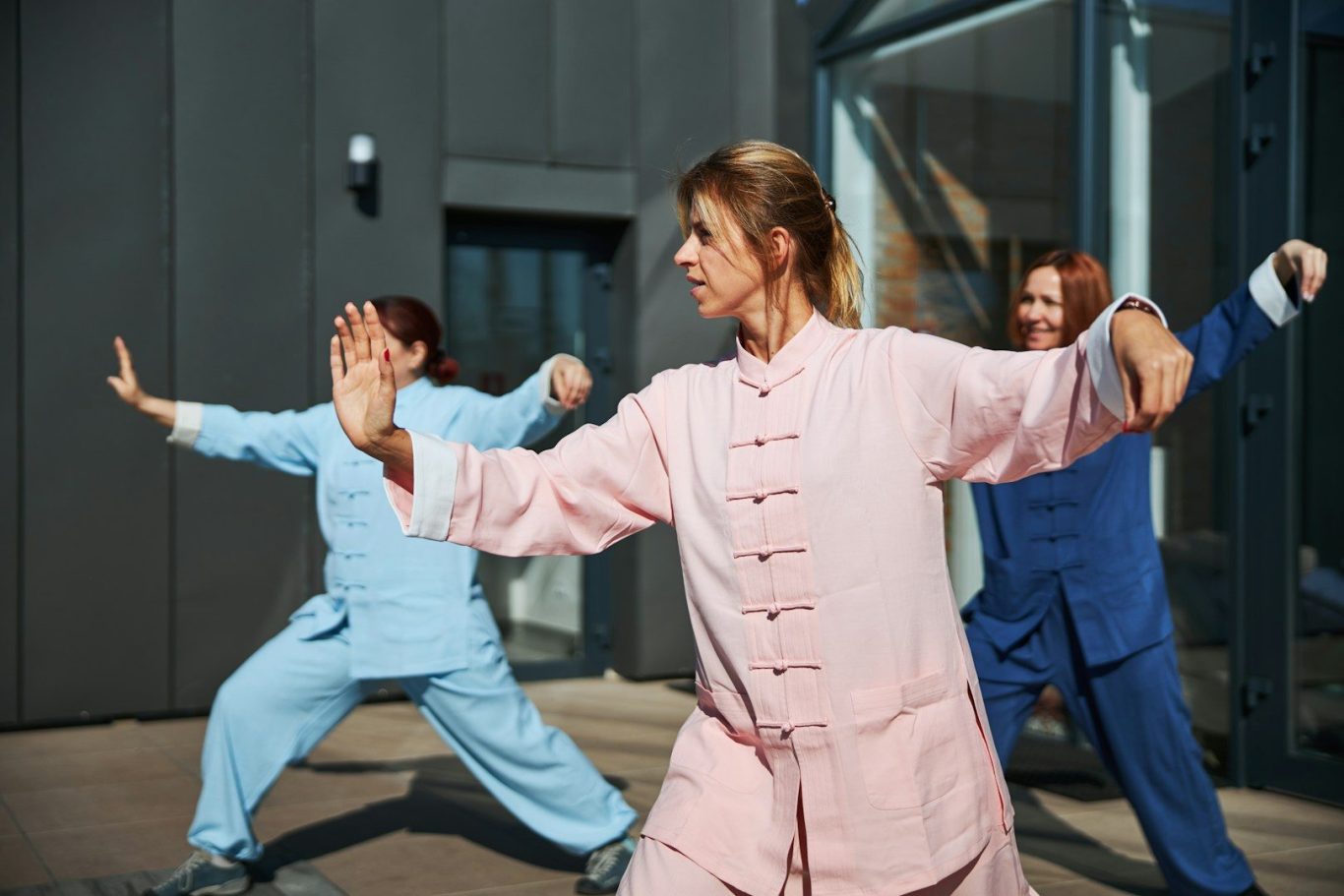
Tai Chi (or Taijiquan) is an ancient Chinese mind-body practice combining slow, flowing movements, deep breathing, and meditation, often called "meditation in motion" for its ability to calm the mind and strengthen the body. Originating as a martial art, it's now widely practiced globally for health, improving balance, flexibility, stress relief, and overall well-being through graceful, low-impact routines.
Key Aspects
- Mind-Body Connection: Focuses on harmonizing mental concentration with physical motion to cultivate inner energy (qi).
- Gentle & Flowing: Consists of a series of interconnected, graceful postures and movements, contrasting with high-impact exercises.
- Breathing: Emphasizes deep, controlled breathing to aid relaxation and focus.
- Origin: Developed from traditional Chinese martial arts, we teach styles - Yang and Sun.
Health Benefits
- Improved Balance & Fall Prevention: Especially beneficial for older adults and those with conditions like Parkinson's.
- Strength & Flexibility: Enhances both upper and lower body strength and flexibility.
- Stress Reduction: Promotes relaxation and mental clarity.
- Overall Wellness: Improves mood, focus, quality of life, and can help manage chronic conditions.
How It's Practiced
- Forms: Sequences of movements (called "forms") are learned and performed.
- Styles: Different styles exist, with the Yang style being the most popular and beginner-friendly due to its slow, gentle pace.
- Accessibility: Can be practiced by almost anyone, regardless of fitness level.
Want to see what we have to offer in our classes?